Outdoor Artificial Topiary and UV Testing: A Buyer’s Checklist
Introduction
Artificial topiary can go outside when the supplier confirms that the exact product configuration is suitable for the intended exposure and the site team approves the installation. To assess a UV claim, match the laboratory report to the foliage or finished product being quoted, read the exposure conditions and result, then check the frame, planter and mounting separately. A report on a leaf sample addresses the behavior of that sample under the reported test conditions.
For a trade buyer, the practical question is whether the documentation supports the application, such as a covered garden center entrance, a sunny restaurant terrace or a seasonal display that moves between sites. These locations can impose different requirements on the same shape. The checks below help you request information that can be used in a purchase decision and kept with the order records.
Describe the placement before asking for an outdoor rating
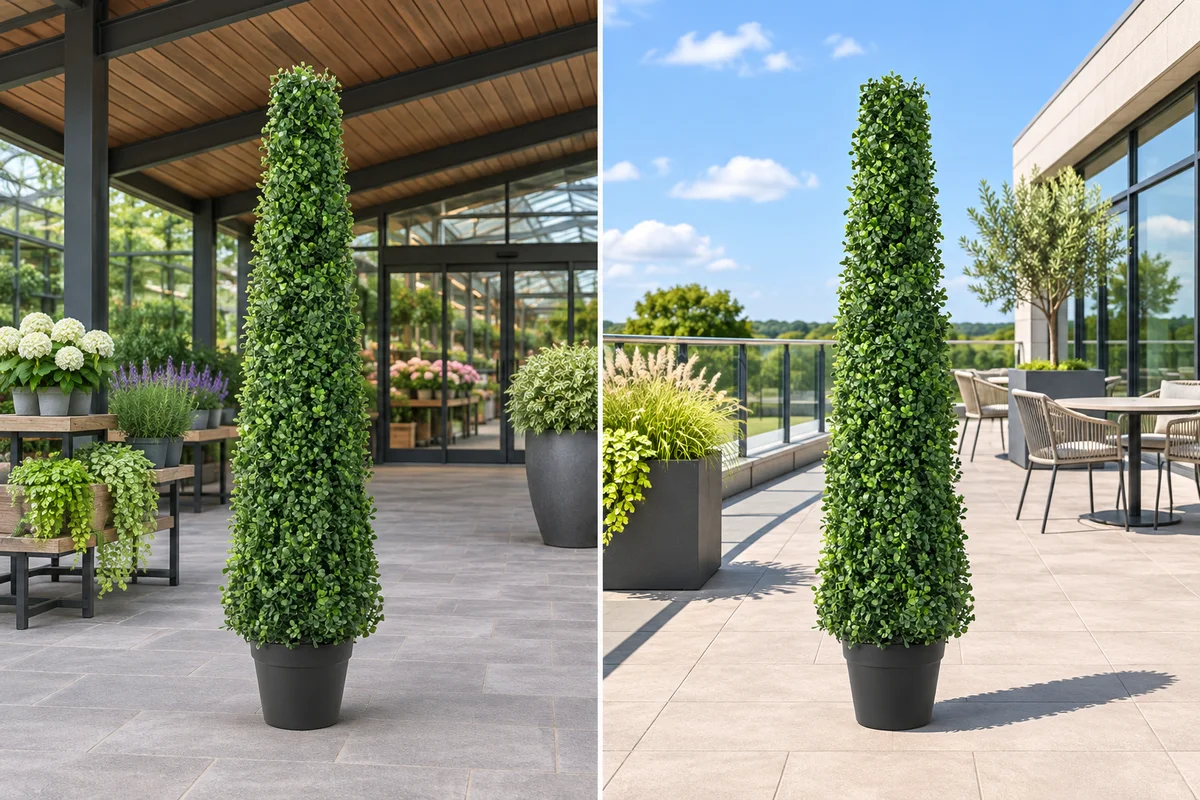
Begin with a location brief. Include the city or region, the planned display season, whether the topiary will stay outside overnight, and photos taken from the directions where sun, rain and wind reach it. A covered doorway may receive angled sunlight and wind-driven rain. A plaza may receive reflected light and be exposed to gusts. Give the supplier enough information to assess the proposed use.
| Placement | Information to provide | Questions to ask |
|---|---|---|
| Indoors near glazing | Window orientation, hours of direct light and proximity to heat sources | Is the selected foliage suitable for bright indoor placement? |
| Covered entrance | Canopy depth, sun angles, splash and wind exposure | Which use conditions apply to the foliage and complete planter assembly? |
| Open terrace or courtyard | Direct sun, rainfall, surface, exposure to gusts and duration outdoors | Is the configuration suitable, and what installation guidance is available? |
| Rotating seasonal display | Outdoor duration, frequency of moves and storage conditions | How should staff handle, inspect and store the unit between deployments? |
If the same SKU will be distributed to several stores, capture the most demanding proposed exposure and any exceptions. A covered store entrance and an open pavement position can require different decisions. Keep a record of where each approved configuration may be used, especially when central purchasing buys the same silhouette for indoor and outdoor locations.
Define what counts as acceptable appearance
The term outdoor describes intended use. A claim such as UV resistant is more useful when it comes with a tested component, a method, an exposure condition and a stated outcome. For a retailer, the practical appearance requirement may be whether two units in a paired display still look alike. For a project buyer, it might be whether the greenery retains an acceptable appearance over a planned event or refurbishment cycle.
Describe what matters visually and physically. For example, specify whether you care about visible color shift, surface changes, leaf brittleness or the integrity of foliage attachments. Ask which of those properties were evaluated. A report measuring color change can inform an appearance review. A separate observation or test would be needed to establish another property, such as attachment performance after exposure.
Read a UV weathering report in five steps
1. Confirm the sample identity
Start with the report number, issue date, issuing laboratory, applicant and sample description. Look for a model code, material or sample identifier, color and any photos included in the report. Then ask the supplier to explain the connection between that sample and the quoted specification. A report for a green molded leaf might be relevant to a model using that exact material and formulation. A new pigment, supplier or coating can change the basis of the claim.
If a report refers to a flat material specimen or a foliage component, write down exactly what was covered. Ask which other components are used in the product and whether separate documentation is needed. Match revision identifiers where available. If the product code in the quotation differs from the report identifier, request a written cross-reference rather than relying on a thumbnail or a logo.
2. Check the method and actual exposure
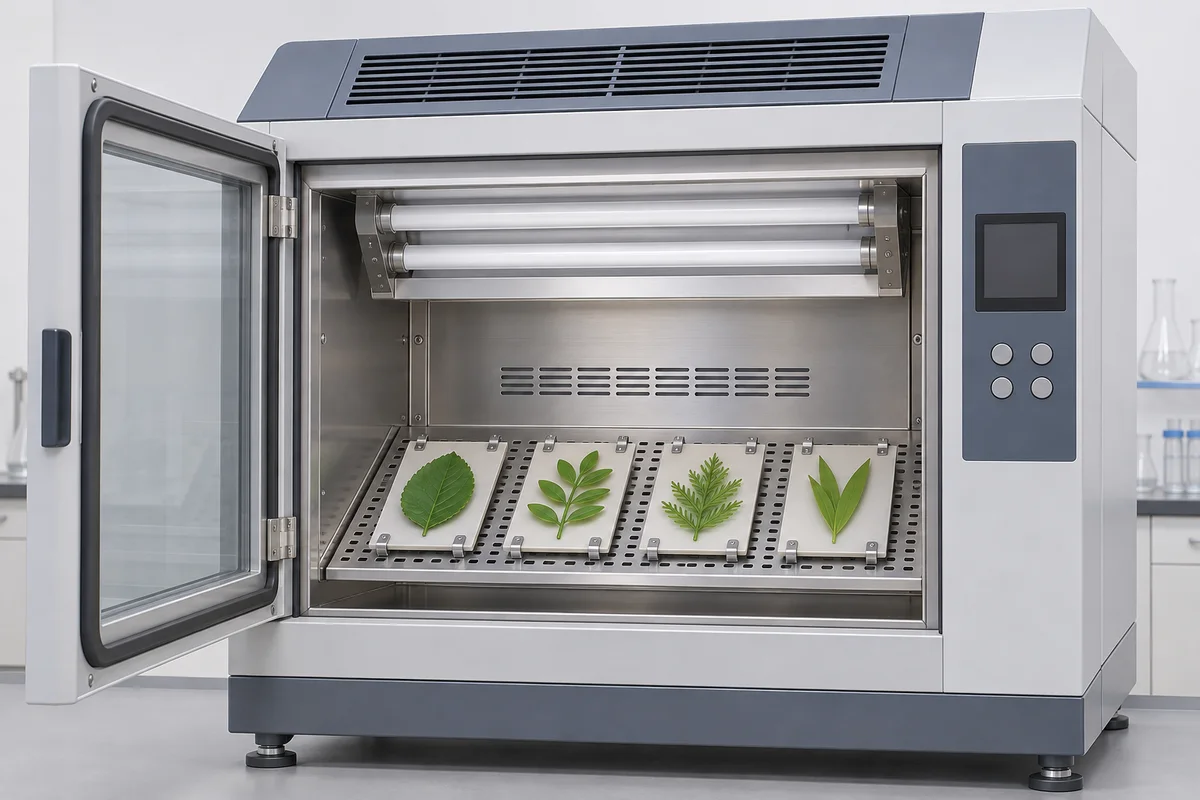
A report should tell you how the specimen was exposed. ASTM G154 refers to practice for fluorescent UV lamp apparatus. ASTM G155 refers to practice for xenon arc apparatus. The method identifiers help you understand the general apparatus. The report's cycle, exposure duration and other conditions are what make the individual result interpretable. ASTM durability and weathering standards
Record the method and edition as cited in the actual report. When available, note the lamp or filter configuration, the cycle, temperatures and any moisture stages. Two reports with the same number of hours can have different exposure conditions. If you need to compare candidates directly, ask whether they can be evaluated using a common method, cycle and endpoint chosen for the intended application.
3. Read the result and the acceptance criterion together
Find out what the laboratory recorded after exposure. The report might describe a visual assessment, provide a measured color difference, or show observations at several time points. If it lists a pass result, locate the criterion used and who specified it. Some reports provide observations without setting a pass threshold. In that case, the buyer and supplier need to agree how those observations relate to the intended display.
For a measured color difference, ask which color-difference method was used, what the reference was and where readings were taken. Buyers comparing different shades should confirm whether the report tested those colors or a representative sample. A photograph can help illustrate the type of change, but camera settings and light can affect how it appears on screen. Keep the stated result alongside any before-and-after imagery.
4. Keep lab exposure separate from service life
There is no universal conversion from accelerated weathering hours to years outdoors. Site climate, direction and angle of exposure, shading, moisture and the material's degradation behavior all influence the relationship. A test can provide comparative evidence under defined conditions. If someone proposes a service-life estimate, ask for the basis and the relevant exposure data for that particular material and use. Q-Lab guidance on laboratory hours and outdoor exposure
Likewise, record warranty terms separately if they matter to your purchase. Ask what components and changes are covered, under what use conditions and what documentation is needed for a claim. A lab report, an outdoor-use recommendation and a commercial warranty answer different questions. Save each as a separate record so that later buyers or installation teams can see which one they are relying on.
5. Match the evidence to the quotation
Put the quoted model, size, foliage finish and planter in a row in your comparison sheet. Add the report identifier, tested sample, method, stated outcome and placement conditions in the next columns. If the supplier changes the material or sourcing after sampling, ask whether the report is still applicable before approving the revision. Attach the relevant confirmation to the purchase order where your process permits.
A name such as SGS identifies the report issuer only when shown on an authentic document. Ask for the applicable report and use the issuer's verification process where available. Review the listed sample and result even after the document is confirmed. A laboratory name alone provides no information about which variant or component was evaluated.
Ask for the documentation that applies to your project
Send the model code, foliage color and a description of the planned location. Ask for written use conditions and any report available for the quoted material or configuration. If you need a specific acceptance criterion, include it in the request. Ask About UV Test Documentation
Assess the complete assembly separately
Planter, frame and attachments
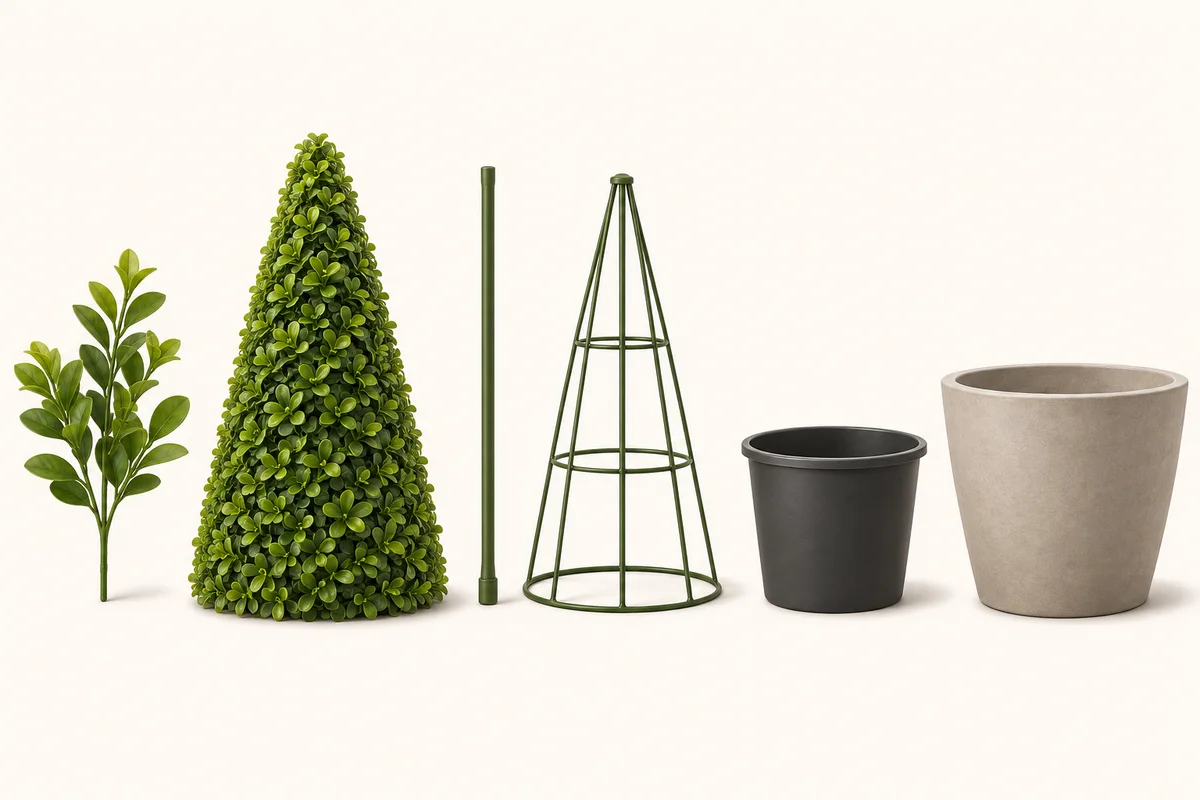
List the parts exposed to the site. Include foliage, branches or attachment points, any internal frame or stem, the pot and an outer container if one will be used. Ask how each part is intended to be used and whether water can accumulate in the assembly. Get instructions for drainage, handling and cleaning where relevant. An exposed setting can place demands on the structure and finish even if the foliage has supporting weathering data.
With a sample, inspect the pot and how the stem attaches to it. If a decorative outer planter will be sourced separately, confirm its internal fit, drainage arrangement and how the two pieces interface. Request diagrams or instructions from the supplier for the configuration you plan to install. Where an anchoring or fixing design is needed, have it reviewed for the site by the party responsible for installation.
Wind, public access and installation preparation
Before delivery, confirm where each unit will sit and who is responsible for safe installation. For an exposed or public site, give the responsible installer the assembled dimensions and mass, base geometry and any supplier installation instructions. Site-specific judgment may be needed for anchoring, drainage, maintenance access and placement near pedestrian routes. Avoid adopting a universal ballast amount based on product height alone.
Plan how staff will remove, store or check the product during severe weather or after an impact, according to the site team's approved procedure. Identify who checks loosened fittings or damage, and keep the supplier's contact and model details in the handover file. The review belongs alongside the test documents because it addresses a different risk.
A hypothetical comparison of two quotations
Imagine a buyer is comparing two cone-shaped topiaries for a covered hotel entrance. One supplier provides a brochure describing the foliage as UV resistant and sends a report for an unidentified green sample. The other identifies the foliage code on the quotation and supplies a report listing that code, the exposure cycle and the observed color change. The second response gives the buyer a clearer basis for asking whether that evidence is relevant to the exact color and placement.
The first quotation could become comparable if the supplier supplies a written link between the sample and the offered SKU, plus the missing result. The second still leaves questions about the planter, frame and installation. The comparison sheet might mark foliage evidence as documented for one quote, pending for the other, and site installation pending for both. That separates the open questions instead of reducing the decision to a single outdoor label.
For a longer rollout, the buyer could review a sample at one representative site before allocating stock. Take dated photos from a consistent position and use a retained reference sample where practical. Record the exposure and any changes your team observes. This is a site observation exercise, with value for the specific project. Its duration and conditions determine how much it can tell you about future performance.
Keep a record that receiving and operations can use
Before production, agree on the appearance sample and the material identifiers. Before shipment, request photographs of the product and labeling that let receiving match the delivery to the approved configuration. Ask your inspection team to flag any visible substitution, damage or inconsistency with the approved sample. Shipment inspection can help confirm what was packed. Weathering performance depends on the appropriate test or exposure evidence.
After delivery, retain the quotation, report, supplier confirmation and setup instructions together. Record where the units were installed and when. If the buyer later requests a replacement in a different shade or size, reconfirm whether the existing evidence applies. A small document trail makes it easier to explain the original decision, identify changes and request the right follow-up.
Specify what happens when one part of a pair changes
An entrance pair can draw attention to differences that are less visible in a standalone plant. If one side receives more sun or one unit must be replaced early, compare the pair at the normal approach distance before deciding whether to replace a single item or review both together. Keep a dated photograph of both units at installation. If an appearance concern arises, photograph both again in the same light and note which side receives the greater exposure.
Plan for this at the specification stage by recording the approved foliage finish and asking how the supplier identifies the replacement configuration. If exact matching matters, discuss a retained sample or spare units as part of your purchasing plan. A reorder from the same model family may still need confirmation of the finish. For a multi-site rollout, give the store team a simple way to report the location, model and photos together so the buyer can identify whether the concern relates to exposure, physical damage or a replacement mismatch.
FAQ
Can indoor artificial topiary go outside under a canopy?
Ask the supplier about the specific model and conditions. A canopy can reduce exposure, while the position may still receive angled sunlight, moisture or wind. Provide a photo and describe how long the product will stay outside.
Does a UV test report cover the whole artificial plant?
Check the sample description. A foliage specimen report covers the tested specimen and reported outcome. Use separate information to assess any frame, planter, mounting or other component that the report does not identify.
How long will UV-resistant topiary last outdoors?
There is no reliable general lifespan for all products and sites. Ask for evidence specific to the quoted material and exposure, written use conditions and any applicable warranty. Keep the expected appearance and review schedule specific to your project.
Is a longer accelerated UV test always better?
Compare the methods, cycles and endpoints first. Duration is informative when the conditions and measurement criteria are understood. A longer result from a different apparatus or material can answer a different question.
Can I use the same report for a different color or size?
Ask the supplier to document how the tested sample relates to the requested variant. A size change may leave foliage unchanged but still affect the assembly and installation. A color change may require separate evidence if it changes the tested formulation or finish.
What should I send with a request for outdoor topiary?
Include the catalog model or target shape, height, quantity, intended site, sun and weather exposure, and any evidence or installation requirements. Identify the question you need answered, such as report applicability, drainage, or the instructions for the assembled unit.
Conclusion
A defensible outdoor purchase connects the site, the quoted configuration and the relevant evidence. Identify the sample and result behind the UV claim, agree on the intended use and have the complete installation reviewed for its location. Keep the decisions in the order file so the same requirements can be applied at receiving and on reorder.
Send your outdoor project requirements
Tell SanBao where the topiary will be placed, the shape and size you are considering, and the documentation your project requires. Include the approximate quantities and destination so the team can respond against a specific configuration. Send Your Requirements