Wholesale Artificial Plants: MOQ, Samples and Carton Checklist
Introduction
SanBao’s wholesale MOQ is one 20-foot container per order. To plan that order, confirm the model mix, approve a representative sample and agree how the goods will be packed and inspected. Put the order quantity, units per carton, outer carton dimensions, gross weight and delivery terms on the same comparison sheet. This makes it possible to compare the offer against your assortment, storage and receiving requirements.
A buyer might see an attractive unit price on a tower topiary and discover later that a preferred size has a separate minimum, a custom planter changes carton dimensions or a loose insert lets the pot move in transit. The checkpoints below help you resolve those questions before committing to production. The examples illustrate a buying process. Their quantities and carton dimensions are hypothetical.
Ask how the MOQ applies to your assortment
MOQ stands for minimum order quantity. SanBao expresses it as a container per wholesale order. The number of plants that fit depends on the models, sizes, planters and packing selected. Prepare quantities by variant so the factory can review the proposed assortment and loading plan.
Put each configuration on its own line
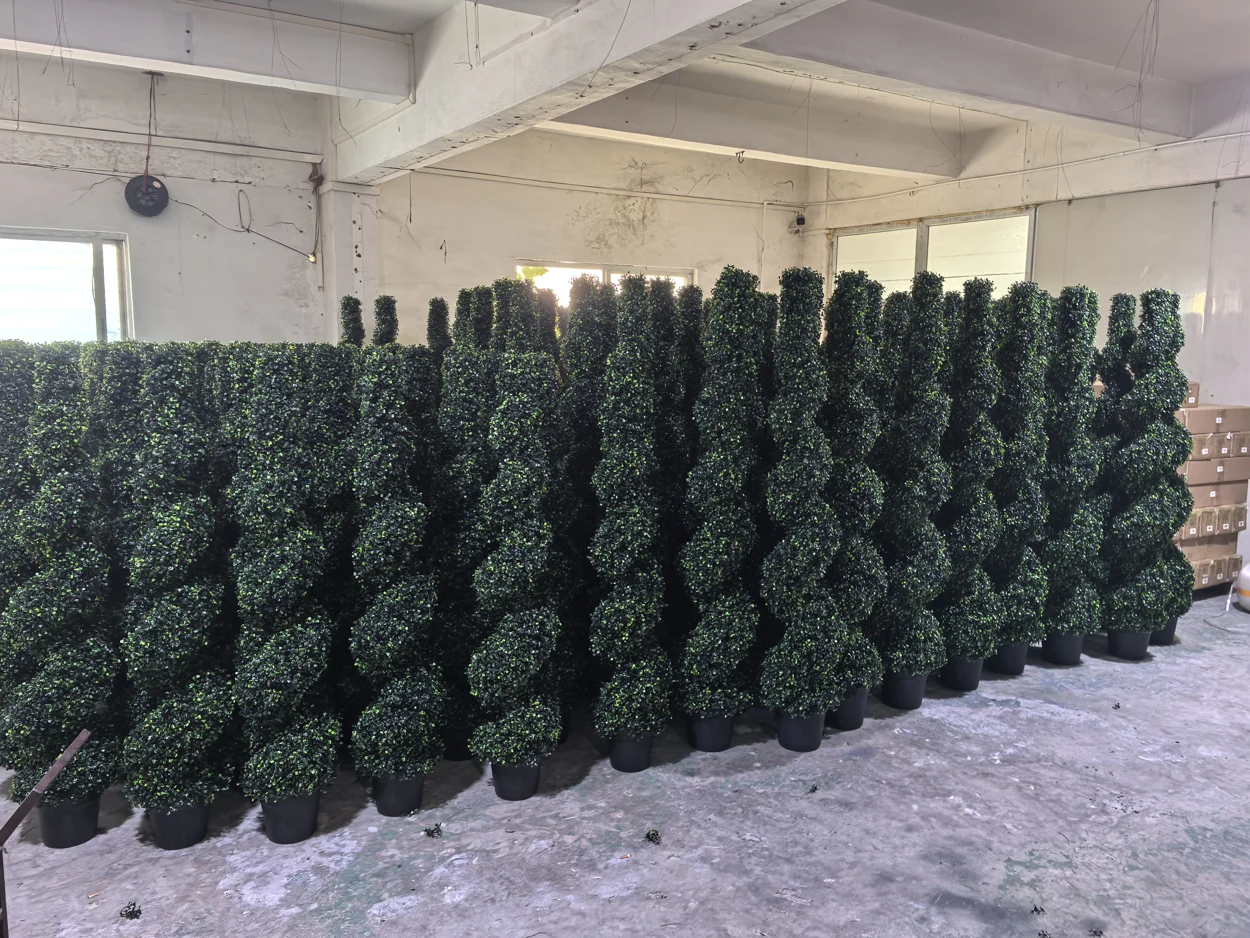
Use a row for every model, height and variant. For example, SanBao lists SBY-008 spiral topiary in 120 cm and 152 cm heights. If you want both, write two lines and add a quantity to each. If a carton or decorative planter differs, give that variant a separate line too. For custom products without a final model code, use a drawing revision or a reference photo identifier until a supplier code is assigned. SanBao wholesale catalog
| Field | What to record |
|---|---|
| Product | Model code or drawing revision and shape |
| Variant | Finished height and width, foliage color and planter |
| Quantity | Estimated units per line and whether a range is acceptable |
| Packaging | Individual retail pack or bulk pack, labels and markings |
| Destination | Country, delivery point and required arrival window |
| Use | Intended setting and any special tests or installation documentation |
Ask whether the proposed sizes and models can be combined, whether cartons must contain one SKU, and how the order will be loaded. Record the approved mix and pack quantities in the quotation so they can be checked again at receiving.
Separate a standard model from custom work
A change to foliage density, pot style or private-label packaging can affect materials, labor and how items fit in a carton. Ask which changes require a separate sample, artwork approval or packing trial. Where you want a custom silhouette, send a drawing, reference photos or a target height with the maximum width you can accept. Identify the features that must match and the ones the factory can propose.
If you have a seasonal launch, ask for separate timing for samples, production and dispatch. Clarify when each period starts. For example, the supplier may need a signed sample, artwork approval or another agreed milestone before production can be scheduled. Keep these dates distinct from carrier transit and your receiving deadline.
Turn sample approval into a usable specification
The best sample record helps someone who was absent from the review inspect the shipment later. Take dated front and side photos in consistent light, include the model and revision, and record the approved dimensions and visible features. Have the supplier confirm what the sample represents. A sample made for appearance review may use temporary packaging or a substitute pot that still needs final approval.
Inspect the assembled topiary
Set the sample on a level surface and follow any setup instructions. Measure the overall height and widest foliage span. Compare the taper, ball shape or spiral gaps with the approved reference. Inspect the planter finish, the stem position and visible attachments. If the product has several branches or topiary balls, check its front, side and back. For a matched pair, place units next to each other and look for differences that matter at the expected viewing distance.
Record the tolerances or appearance criteria that the buying and supplying teams agree to use. A phrase such as “consistent green” is difficult to apply during shipment inspection. It is easier to compare units when the inspector has a retained sample, a dated photo set and a defined finish. If the planter is locally sourced, document its interface with the supplied plant so receiving staff understand which parts should be included.
Review the packed sample too
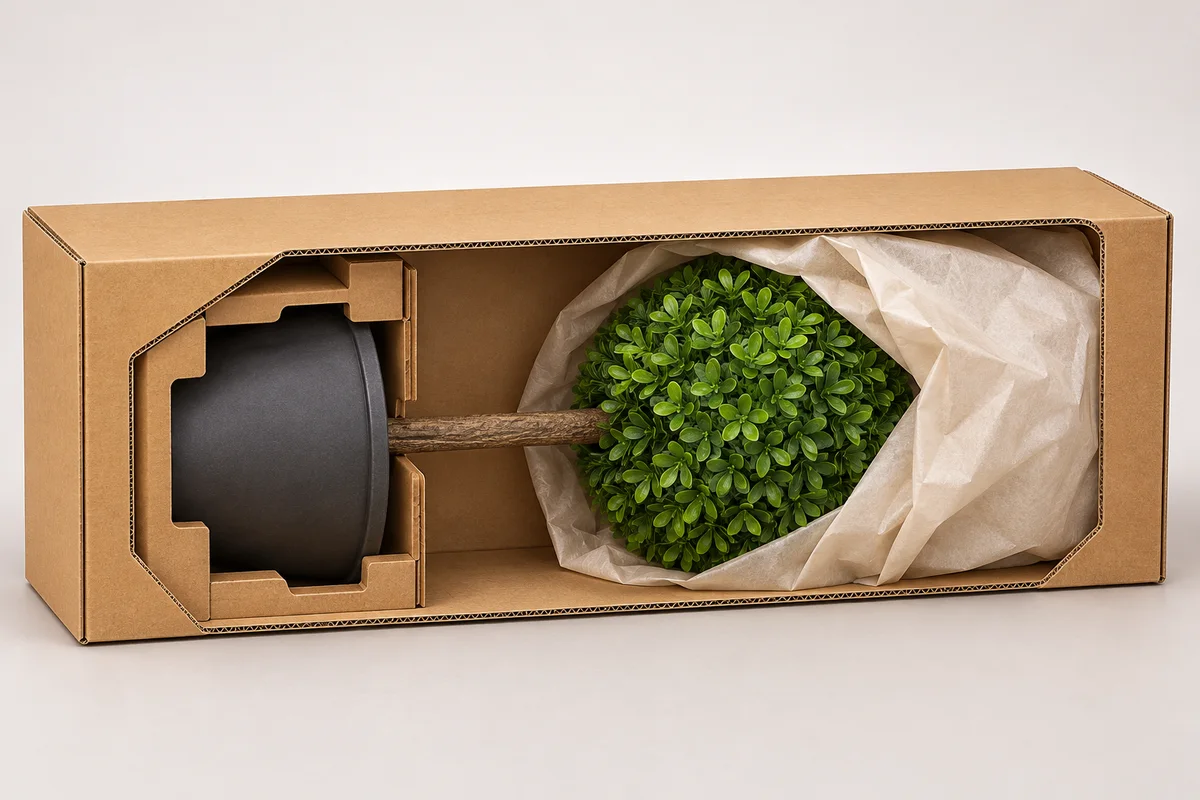
Ask for an example of the planned packing or a packed sample if it is available. Open it using the instructions intended for your receiving team. Record how the pot is restrained, where the branches are supported and what protection keeps the foliage from rubbing. Confirm whether the buyer will need to reshape the leaves after unpacking and whether setup instructions will travel with the unit.
Take photos of the open carton and the assembled product. If unpacking damages the foliage or the pot shifts, document the issue and agree on the packaging revision. Ask whether the revised configuration changes the carton measurements, weight or unit count. The approved packing revision should be recorded with the approved product revision.
Check cartons before comparing landed costs
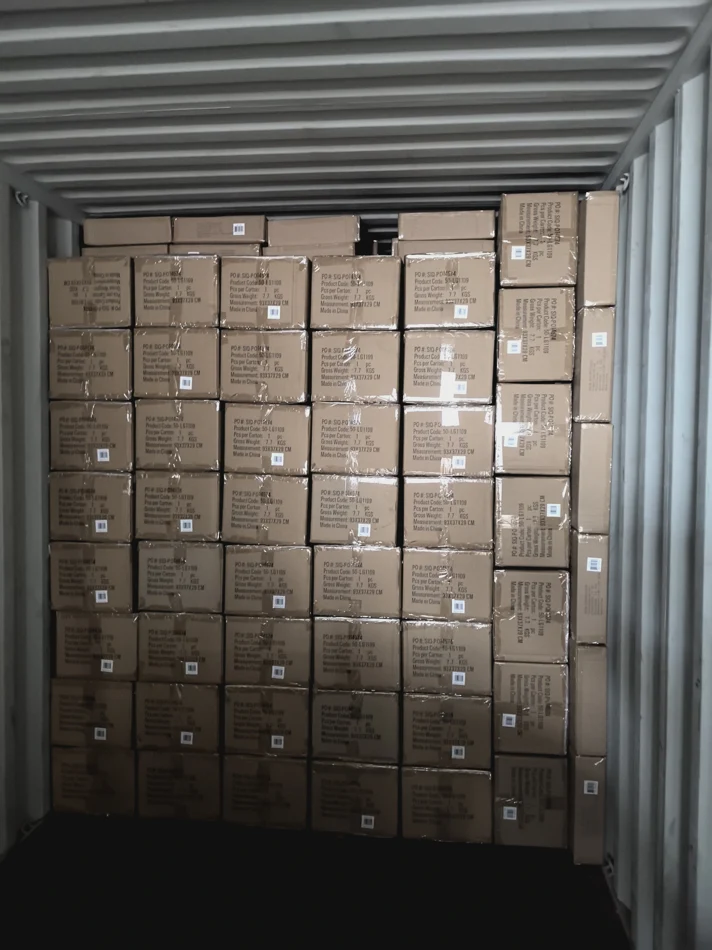
Ask for outer length, width and height, the unit of measurement, units per carton, gross and net weight, and the packaging configuration for each SKU. If palletized, request the proposed pallet size, loaded height, pallet count and gross weight. Where more than one carton type is used, list each one separately. Clarify whether labels and protection are included in the quoted pack.
Calculate an initial packed volume
For dimensions measured in centimeters, multiply carton length, width and height and divide by 1,000,000 to calculate cubic meters per carton. Then multiply by carton count. For example, a hypothetical carton measuring 65 × 40 × 35 cm occupies 0.091 m³. At two units per carton, 120 units require 60 full cartons, for a nominal carton volume of 5.46 m³ before pallets or other space allowances.
Use the calculation to compare pack options, then ask your forwarder how the shipment will be charged and consolidated. The quoted freight volume may depend on palletization, space utilization or the carrier's measurement and rating rules. When the order quantity does not divide evenly by the pack count, confirm how any partial carton will be packed, marked and counted.
Evaluate packing by the distribution route
Consider how cartons travel after they reach your warehouse. Bulk cartons can be suitable for consolidated receiving while individual items shipped onward by parcel may need different protection. Map the route from the factory to the final receiving point, including any retailer distribution center or parcel leg. If your buying program requires formal packaging performance testing, have the responsible team choose a procedure suited to the actual distribution environment and pack. ISTA guidance for selecting packaging tests
Send your order lines for a factory review
Send your model list, quantities by height, desired packing and destination. Ask SanBao to confirm carton details and review the loading plan for your order. If you have two different distribution routes, explain which SKUs will travel through each route. Send Your Requirements
Agree on shipment inspection before production
A pre-shipment review is easier when the buyer and factory agree in advance on the inspection scope, when goods should be ready, who will inspect them and how findings will be handled. For a third-party inspection, share the purchase order, approved sample records and the sampling or acceptance requirements agreed with the inspector and supplier. Match checks to the way your team will receive and use the product.
| Review area | Practical checks | Evidence to request |
|---|---|---|
| Identity and counts | Model and size match the order lines. Carton count and pack quantity reconcile. | Packing list, carton labels and product photos |
| Assembled product | Overall dimensions, shape, foliage appearance and planter condition meet agreed criteria. | Measurements and front, side and close-up photos |
| Pack integrity | The pot is restrained and foliage is protected at contact points. | Photos of representative open cartons and the revised packing layout if applicable |
| Retail readiness | Labels or barcodes are in the approved position and identify the correct variant. | Label artwork reference and photos of labeled units |
| Dispatch handover | Count and packing configuration align with the agreed shipping documents. | Final packing list and dispatch status |
Decide how your inspector should record an exception. For instance, if one selected carton has two different sizes but the purchase order calls for a single SKU per carton, identify the affected labels, document the contents and ask for a corrective action before release. Agree whether any affected portion needs to be checked again. Keep the record with the approved order so receiving knows what was corrected.
Factory testing can mean a check on a sample, a packing trial, or a formal test on a defined material or pack. Ask for the scope and criteria if a report is part of your purchase. A sample unpacking check can reveal setup issues. It cannot establish a UV claim, and a weathering report cannot show that a carton will survive your distribution route. Review each type of evidence against its own requirement.
Align price, shipping terms and the launch date
Compare offers at equivalent delivery points and with the same configuration. Record the agreed Incoterms® rule and named place or port when applicable. Those rules allocate specified obligations, risks and costs between seller and buyer. Discuss the choice with your logistics team based on how the shipment will be handed over. Put product specifications, inspection arrangements and payment milestones in their appropriate parts of the order. ICC Incoterms® 2020 rules
For a useful price comparison, keep line items for the product, custom options, packaging, sample costs and transport assumptions. Ask what changes if you switch to a wider planter or an individual retail pack. Those changes may affect the total number of cartons, how they stack and the time required at receiving. Quote comparisons are most useful when they record what each offer includes.
Work backward from the date stock must be available to the store or project team. Make room for sample transit and revision, production, inspection, the shipping handover and final receiving. Ask for an update if artwork approval, a material revision or packing changes could affect the plan. Record a contact for each milestone so questions go to the right person before they become delays.
Review the trade-offs in a hypothetical order
Imagine an importer wants two heights of spiral topiary and a seasonal animal design. The first quote permits the heights to be mixed toward a single order minimum but requires a separate minimum for the animal. The second permits all three models in one order but includes a taller carton for the spiral. Neither quote can be compared by unit price alone. The buyer needs to check whether the model mix fits the display allocation, whether the cartons fit the warehouse, and what the inspection and dispatch terms include.
A useful follow-up would ask each supplier to complete the same order table. Add actual units by model, units per carton, carton dimensions, gross weight, sample status and delivery terms. If the buyer has limited storage, request an alternate pack and ask whether that change would require a new packed sample. Keep the response with the proposed order rather than replacing it with a verbal assurance.
Give receiving a short set of instructions
Send the final packing list, model photos and unpacking instructions to the receiving team before arrival. Ask them to record the carton count and condition when the shipment is received and compare any opened units against the approved references. Separate visible transit damage from a product discrepancy in the record. The photographs that help resolve a crushed carton are different from the photographs needed to show that two similar heights were packed under the wrong label.
If inventory will be split across branches, reconcile units by variant before allocating them. Keep track of units reserved for display, spare components and units available for sale. If your process permits, save a receiving photo of an approved carton and its contents to make the next shipment easier to review. Add any confirmed corrections to the repeat-order specification so that the next order uses the revised carton or label rather than an earlier sample file.
For the next purchasing cycle, compare the quantities received with what stores actually used. An opening assortment may need more of one height and fewer of a slow-moving seasonal design. Review how the revised mix can be packed and loaded, and carry forward only the parts of the previous order that still apply.
FAQ
Can I mix different artificial plants to meet the MOQ?
SanBao’s wholesale MOQ is one 20-foot container per order. Send your proposed model and size mix with quantities by line so the factory can confirm which items can be combined and how they would be packed.
What measurements should I request for cartons?
Ask for the outside dimensions, units per carton, gross and net weight and, if applicable, loaded pallet dimensions. Confirm that the figures refer to the selected variant and packing method. Use consistent units when comparing suppliers.
Do I need a new sample for a custom planter or label?
Ask whether the change affects appearance, fit, weight, handling or carton configuration. Agree what should be reviewed again. A carton or labeling change may call for a revised packed sample or artwork approval even when the foliage remains the same.
What should a shipment inspection check?
Use the agreed order and approved sample to check model identity, quantity, dimensions, appearance, planter condition, packing and labels. Decide in advance how to record and resolve exceptions. Select any formal sampling or test procedures with the responsible quality team.
When does lead time start?
Ask the supplier to specify the milestone, such as approval of the production sample, purchase order or artwork, under the agreed terms. Separate production timing from dispatch, carrier transit and final receiving so you can plan the actual launch date.
Can I compare factories using the carton volume alone?
Carton volume is one input. Compare the same product and pack, then consider gross weight, quantity per carton, protection, distribution route and delivery terms. A smaller carton is valuable if the product still arrives in the condition and configuration required.
Conclusion
An actionable wholesale quote connects the order minimum to an assortment, approved samples, carton details and delivery terms. Approve the product and its pack together where possible. Give the inspection team measurable criteria and keep the final carton figures with the order. The same records help a buyer handle exceptions and place a repeat order.
Request a model-by-model wholesale quote
Send SanBao your model codes or reference photos, height and quantity per line, delivery country and target arrival date. Include any private-label, carton or inspection requirements that affect the order. Get a Quote